
In an unpredictable world, learning self defense basics is an empowering step toward enhancing your personal safety and confidence in everyday situations. Rather than focusing on complex martial arts, practical self-defense emphasizes simple, effective techniques, keen situational awareness, and proactive strategies to avoid, de-escalate, or escape a threatening encounter.
In this guide, we’ll cover the fundamental principles of everyday personal protection, from recognizing potential dangers and using your voice assertively to mastering a few key physical moves, helping you build a foundation of skills that can be relied upon when seconds count.
Self Defense Basics That Build Confidence and Safety
What Are The Most Effective Practical Self-Defense Techniques?
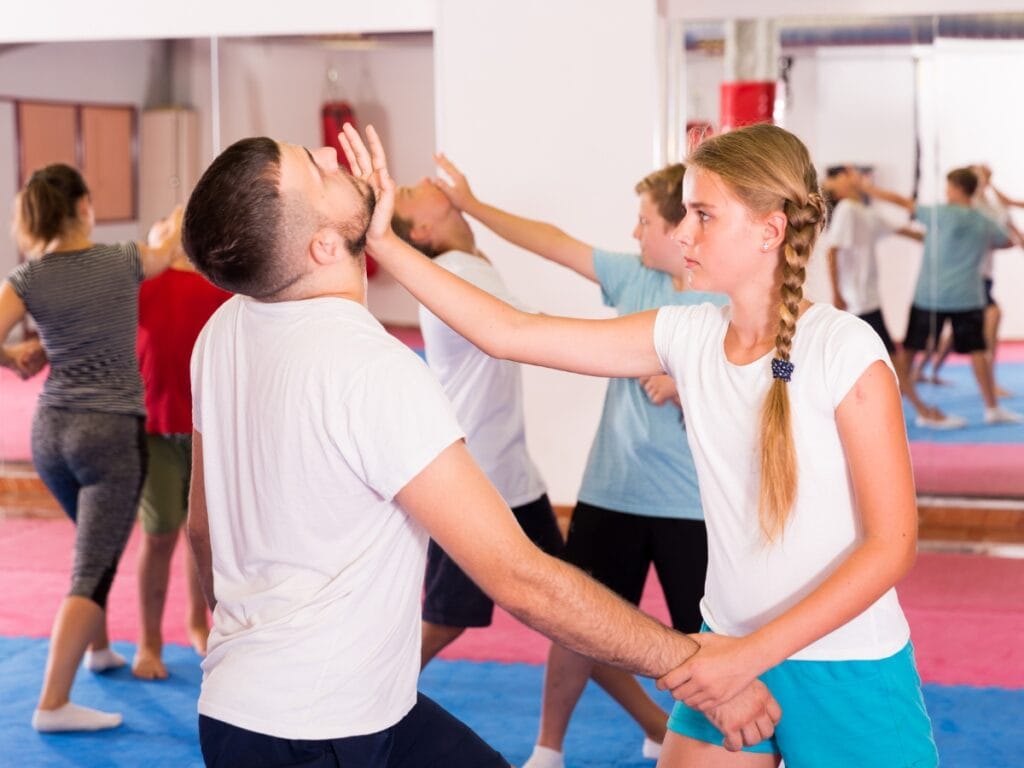
When people look up self defense basics, they are usually not trying to become a fighter. They want a realistic way to feel safer in everyday life, whether that means walking to a car at night, traveling for work, or dealing with an uncomfortable encounter in public. The most effective self-defense is built around prevention first, then simple actions that help you create space and leave quickly. That focus matters because most real-world situations happen fast, in tight spaces, and under stress.
Practical self defense basics combine body mechanics, awareness, and decision-making. The goal is not to “win” a confrontation. The goal is to reduce risk, interrupt the threat, and get to safety.
Which Physical Defense Moves Should Professionals Master?
For many people, the most useful physical skills are the ones that are easy to remember and work under pressure. Open-hand strikes are often taught because they are simpler than closed-fist punches and can be used to create distance when someone is too close. An open-hand strike, sometimes called a palm strike, is typically used to disrupt an attacker’s balance or attention long enough to move away.
Close-range strikes are also common in self defense basics because many incidents happen at arm’s length. Elbow strikes are often taught as a compact movement that can be used when there is not enough space to swing a larger strike. Knee strikes are another option because they can be delivered from a stable stance and can help break contact when someone is grabbing or crowding you. In real training, these movements are practiced with an emphasis on balance, timing, and getting out immediately afterward, not staying engaged.
It is also worth remembering that physical techniques work best when they are paired with positioning. Keeping your hands up in a non-threatening way, protecting your personal space, and moving off-line rather than straight backward are details that make basic techniques more effective and safer to apply.
How Do Tactical Self-Defense Skills Enhance Personal Safety?
Tactical skills are often what prevent a situation from becoming physical in the first place. Situational awareness is a cornerstone of self defense basics because it helps you notice problems early, when you still have options. This can be as simple as scanning your surroundings, avoiding distractions like staring at your phone while walking, and paying attention to exits in any space.
De-escalation is another key skill. A calm, firm voice, clear boundaries, and confident body language can reduce tension and signal that you are not an easy target. De-escalation does not mean being polite at all costs. It means staying focused on safety, setting limits, and leaving when something feels off.
Escape strategies matter too. The safest outcome is usually distance and a clear exit route. Practicing how to move toward a safer area, get behind a barrier, or draw attention with your voice can be more useful than memorizing a long list of techniques. In many real situations, the ability to act quickly and leave is what makes the biggest difference.
How To Build Real Confidence With Self Defense Basics
Confidence comes from repetition and realistic practice, not from reading tips once. If personal safety is a priority, consider training with a reputable instructor who emphasizes awareness, boundary-setting, and escape. A good program also discusses legal and ethical considerations, since self-defense laws can vary by location and the goal is always to use the minimum force needed to get away. When self defense basics are taught with that mindset, they become practical tools you can rely on without turning everyday life into a constant threat assessment.
How Does Situational Awareness Training Improve Threat Detection?
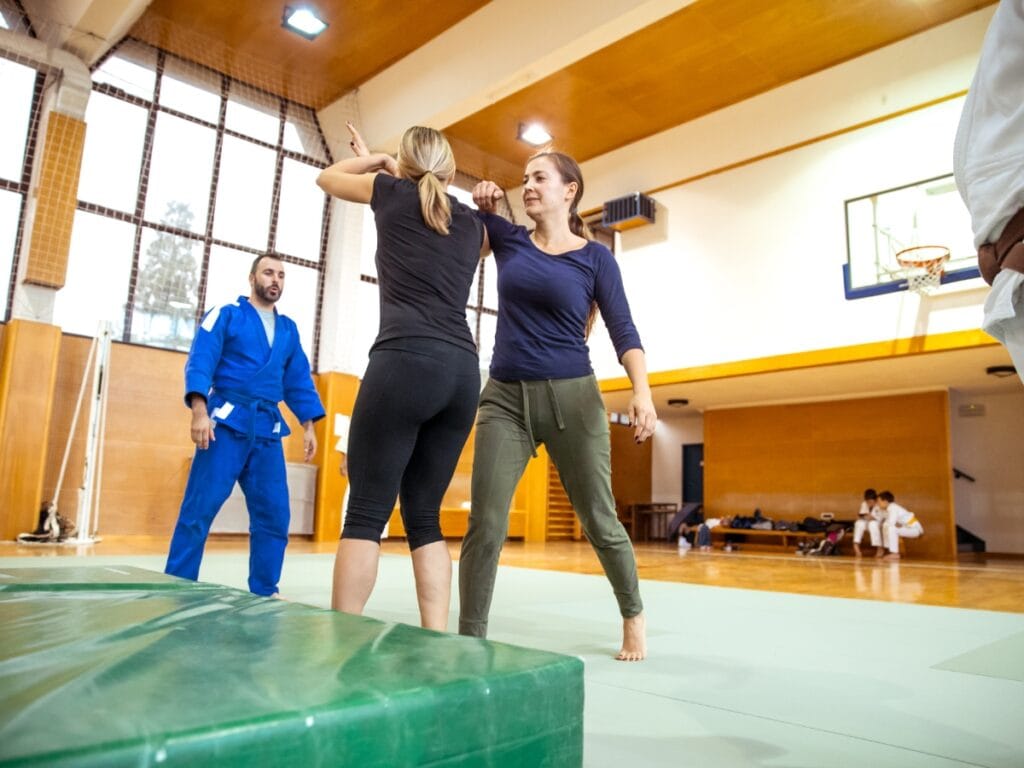
Situational awareness is one of the most useful parts of self defense basics because it helps you spot problems early, when you still have choices. Most people think about self-defense as something that happens during a confrontation, but prevention is usually the bigger win. Situational awareness training teaches you how to notice small details that signal risk, like someone closing distance too quickly, unusual behavior near entrances, or a situation that feels out of place for the setting. The goal is not to be suspicious of everyone. It is to stay present enough to recognize when something is off and move to safety sooner.
For executives and business owners, situational awareness is especially important because daily routines can be predictable. When you travel, visit client sites, manage staff, or attend public events, the same patterns repeat. Training helps you reduce predictability and make quick adjustments that lower exposure without making life feel restrictive.
What Are The Key Principles Of Situational Awareness For Executives?
A practical starting point is environmental scanning. This simply means checking your surroundings as you move, rather than walking on autopilot. You notice who is nearby, what the exits are, and whether anyone is paying unusual attention to you. It takes seconds, but it can help you avoid being boxed into an uncomfortable situation, especially in parking areas, elevators, lobbies, and transitional spaces.
Understanding behavioral cues is another core principle. Many confrontations escalate because warning signs were missed or ignored. Training often focuses on recognizing body language that signals agitation, aggression, or fixation. This can include a person who is pacing, watching you repeatedly, moving into your personal space, or behaving in a way that does not match the environment. In self defense basics, awareness is about pattern recognition. When behavior does not fit the context, you take it seriously and create distance.
Maintaining a low profile can also reduce risk. This does not mean hiding. It means avoiding unnecessary attention in situations where discretion helps. Small choices like limiting how much you share publicly about travel plans, keeping valuables out of sight, and staying aware of where you stop and linger can reduce the chance of becoming a target. For executives, it can also mean thinking about how staff or assistants handle arrivals, scheduling, and entry points so routines are not overly predictable.
How Can Business Owners Apply Situational Awareness Daily?
For business owners, situational awareness is most effective when it becomes part of normal operations rather than a one-time training topic. One useful habit is doing simple safety check-ins of the workplace. You are not looking for perfection. You are looking for obvious vulnerabilities, such as poorly lit entrances, blind spots near doors, or back areas where staff could be isolated. Addressing basic environmental issues can prevent many problems before they start.
Training employees is another practical step. Staff do not need to become security professionals, but they do benefit from learning what suspicious behavior looks like and how to respond calmly. A culture where employees feel comfortable reporting concerns early is often safer than a culture where people stay quiet until something becomes urgent. This fits naturally into self defense basics because it reinforces early detection and early action.
Emergency protocols also matter. Clear procedures reduce panic and confusion when something goes wrong. When roles are understood ahead of time, people move faster and make safer decisions. Even a simple plan for what to do during a threat, where to go, and who communicates with authorities can make a meaningful difference.
Situational awareness training improves threat detection because it builds habits that keep you from being surprised. When self defense basics start with awareness, you are more likely to avoid danger entirely, which is always the safest outcome.
What Are Executive Self-Defense Courses And Who Benefits Most?
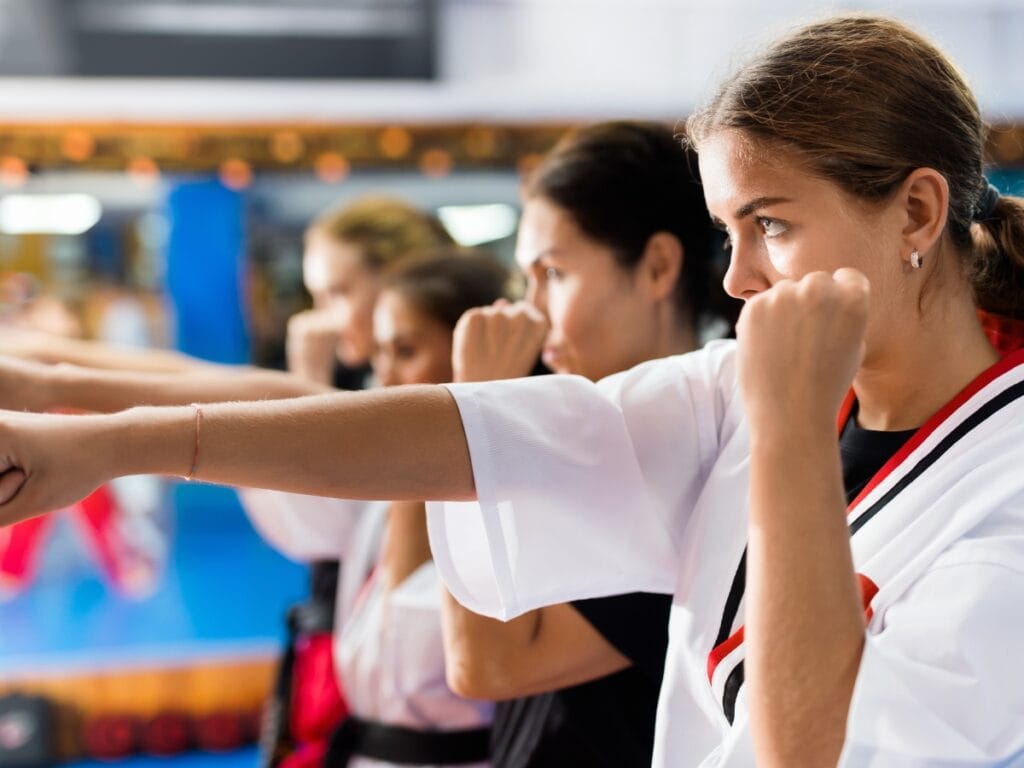
Executive self-defense courses are training programs built for professionals who spend time in public-facing roles, manage teams, travel frequently, or make decisions that can attract unwanted attention. Unlike general fitness-based self-defense classes, these courses are usually designed around real-world work scenarios. That might include entering and exiting buildings, moving through parking areas, handling confrontations in the workplace, or navigating travel situations where routines are predictable and privacy is limited.
For many people, the draw is not the idea of fighting. It is the value of learning self defense basics in a way that fits a professional environment. Executive-focused training tends to emphasize safety planning, awareness, and quick decision-making under stress, along with simple physical techniques that support escape. The goal is to reduce risk and build a repeatable response plan, not to encourage confrontation.
These courses can benefit executives, business owners, healthcare professionals, attorneys, real estate professionals, and anyone whose job increases exposure to strangers, high emotion, or unpredictable interactions. They can also be useful for people stepping into leadership roles for the first time, since visibility often changes how strangers approach you and how you move through daily routines.
How Do Executive Courses Integrate Physical And Soft Skills?
Most executive programs combine physical skills with communication and strategy because many situations can be avoided before they become physical. Physical training typically focuses on foundational self defense basics that work under pressure and do not require advanced athletic ability. That often means learning how to create space, break contact, and move toward an exit quickly. The emphasis is on body mechanics, balance, and simple movements that can be practiced consistently.
Soft skills are often where the biggest value shows up. Conflict resolution and de-escalation techniques help professionals manage tense interactions without escalating them. This can include practicing calm, direct language, setting boundaries, and using posture and positioning to protect personal space while still appearing professional. Risk assessment is another core element. Instead of reacting late, participants learn to notice early warning signs, identify safer routes, and make small adjustments that reduce exposure. This is still self defense basics, but applied in a way that matches the realities of professional life, where you may not want to “cause a scene,” even when your instincts tell you something is off.
Which Customized Programs Suit Property Managers And VIPs?
Property managers and VIPs often benefit from more customized training because their risks tend to be role-specific. Property managers may deal with late rent disputes, eviction tension, vacant properties, maintenance situations, and meetings with people they do not know well. In those settings, training often focuses on positioning, safe meeting practices, entry and exit planning, and how to handle conflict when emotions are high.
VIPs and high-visibility individuals often need a different approach. Their risk factors may include public attention, predictable routines, travel logistics, and unexpected contact in semi-public spaces like lobbies, parking areas, and events. Customized programs may include scenario-based practice tailored to how they move through their day, along with guidance on routines that reduce predictability and improve safety.
Personalized sessions can be helpful when the training is built around real environments and typical situations, rather than generic examples. For many professionals, the real benefit of executive programs is learning self defense basics that feel practical, repeatable, and aligned with the demands of their job.
What Personal Safety Strategies Complement Physical Self-Defense?
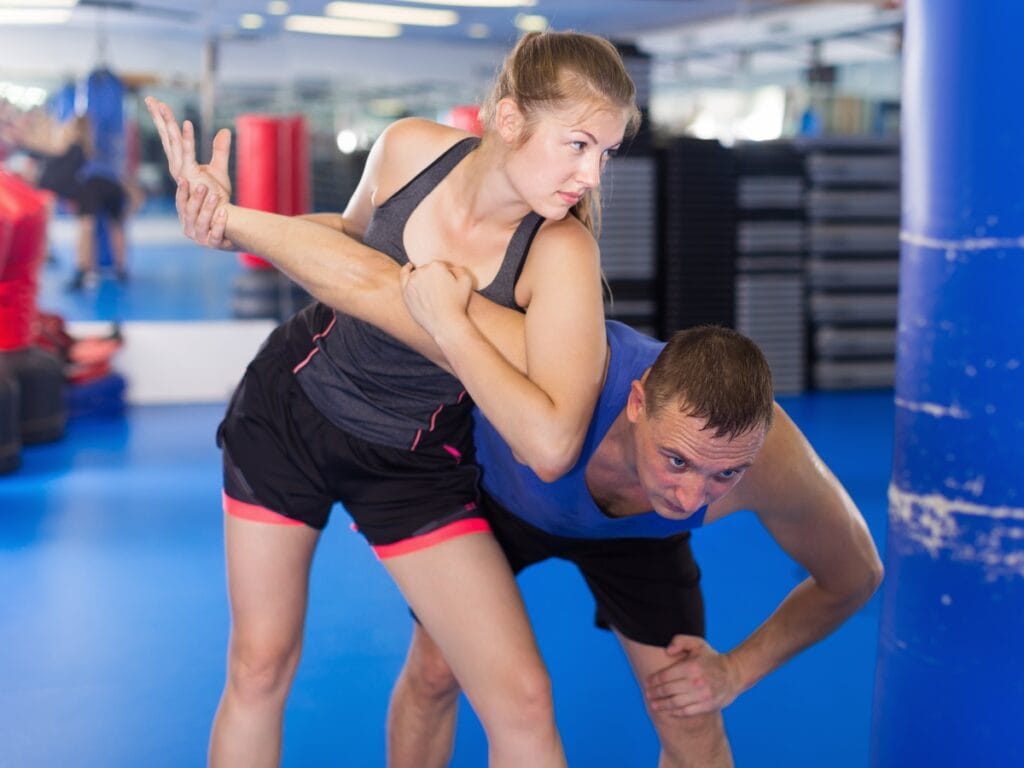
Learning self defense basics is not only about what you would do in a worst-case moment. In real life, personal safety usually comes down to the decisions you make before anything turns physical. The most effective approach combines simple physical skills with prevention strategies like awareness, boundary-setting, and planning. When those pieces work together, you are less likely to get caught off guard, and more likely to leave a risky situation early.
Physical techniques can help you create space if someone closes in on you, but prevention is what reduces the chance you will need those techniques at all. This is why many instructors teach self defense basics as a layered system: notice problems earlier, reduce opportunities for conflict, and keep an exit option in mind.
How Do De-Escalation Techniques Reduce Conflict Risks?
De-escalation is often the difference between a tense interaction and a dangerous one. The goal is not to “win” an argument, it is to lower the emotional temperature and protect your personal space. Active listening can help when someone is agitated, especially if they feel ignored or disrespected. This does not mean agreeing with them. It means using brief, calm responses that show you understand what they are saying without escalating the exchange.
Calm communication matters because tone and pacing affect how safe or threatening you appear. A steady voice, simple wording, and short phrases can reduce misunderstandings and keep you from getting pulled into a back-and-forth. In many situations, the safest move is to disengage. That can sound like, “I can’t help with that,” or “I’m leaving now,” followed by action.
Setting boundaries is another core part of self defense basics because it creates clarity. If someone is crowding you, stepping back and using direct language can help reset the space. If they do not respect that boundary, it is a signal to move toward safety and remove yourself from the situation.
How Awareness And Planning Support Self Defense Basics
Situational awareness is not paranoia. It is the habit of noticing what is around you so you can make small choices that reduce risk. That might mean walking in well-lit areas, keeping your phone accessible but not distracting you, or being mindful of who is approaching and from where. It also includes practical planning, like knowing where exits are, where people are gathered, and how you would leave quickly if you needed to.
Another helpful strategy is positioning. Standing with a clear path behind you, keeping a comfortable distance during conversations, and avoiding being boxed into corners are simple habits that support self defense basics without drawing attention. These are the small details that help you stay in control of space and time.
What Legal Considerations Should Individuals Know In Georgia?
Georgia law includes a “no duty to retreat” provision when a person uses threats or force in accordance with specific self-defense statutes. This is commonly described as having the right to stand your ground in places where you are lawfully present, depending on the circumstances.
Georgia also addresses when force, including force intended or likely to cause death or great bodily harm, may be justified if someone reasonably believes it is necessary to prevent death or great bodily injury to themselves or another person.
Even with these legal protections, self-defense is not a blank check. The idea of proportional response matters in practice, meaning what you do should match what you reasonably perceive as the threat in that moment. If you are learning self defense basics in Georgia, it helps to understand that outcomes can depend heavily on the facts, the setting, and whether your belief about the threat is considered reasonable. This is general information, not legal advice, but it is a reminder that the safest and cleanest outcome is often creating distance and leaving as soon as you can.
When self defense basics are paired with awareness, de-escalation, and smart planning, they become practical tools you can rely on without needing to turn every situation into a confrontation.
How Does Firearms Training Enhance Self-Defense Preparedness?
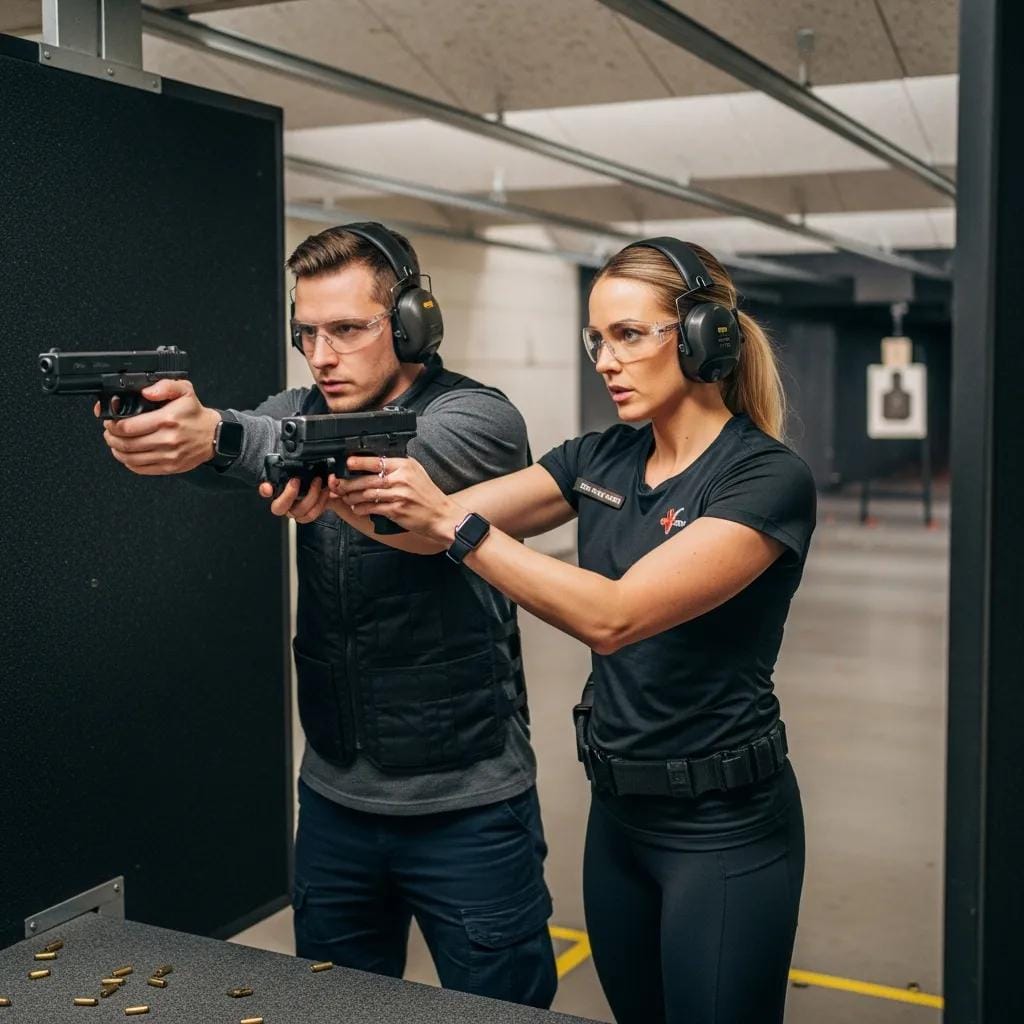
For people who choose to own or carry a firearm, training can improve preparedness mainly by reducing mistakes. A firearm is not a shortcut around fear, stress, or uncertainty. In high-pressure moments, people default to habits, which is why training that emphasizes safety, judgment, and restraint matters. When self defense basics include prevention, awareness, and escape planning, firearms training should support that same goal: staying safe and avoiding harm whenever possible.
It also helps to be clear about what training can and cannot do. Training cannot guarantee a “perfect” outcome in a crisis. What it can do is build safer handling habits, clarify decision-making under stress, and reduce the risk of negligent discharge or poor storage practices that create danger at home.
What Are The Essential Firearms Safety And Proficiency Skills?
The foundation is safe handling. That includes consistent muzzle awareness, keeping your finger off the trigger until you are ready to fire, and treating every firearm as if it is loaded. Safe handling also covers safe loading and unloading, safe transport, and safe storage, especially in homes with children or visitors. Many accidents happen during routine moments, not emergencies, which is why safety habits are the core of responsible ownership.
Another key area is basic proficiency. This is not about learning to “win” a fight. It is about being competent enough to operate the firearm safely, understand how it functions, and recognize your own limits. That includes knowing how to check your firearm’s condition, how to use it as designed, and how to maintain it so it remains reliable. Accuracy matters too, but it should be framed as a responsibility issue. In any defensive context, the safest outcome is avoiding the situation. If force is ever used, it must be controlled, lawful, and as limited as possible.
Situational decision-making is the third essential skill, and it may be the most important. Responsible training emphasizes when not to use a firearm, how to recognize escalating risk early, and how to prioritize getting out safely. This is where self defense basics and firearms training overlap: awareness, boundary-setting, and leaving quickly are often the best protective moves.
How Is Firearms Training Tailored For Personal Protection?
Good training for personal protection is usually tailored by focusing on context and safe routines rather than aggressive techniques. For example, a person who travels for work may need more emphasis on lawful storage and transport, while a person focused on home safety may need a strong plan for secure storage, family communication, and preventing unauthorized access.
Realistic practice, when done safely, often means pressure testing decision-making. That can include learning how stress affects attention, how quickly situations can change, and how to keep judgment clear when emotions spike. Importantly, this kind of training should reinforce that avoidance and de-escalation are always preferable when possible.
Ongoing training also matters because skills fade. Safe handling habits and decision-making stay sharper when they are reviewed consistently, and when training stays grounded in responsibility, not bravado. If you are building self defense basics into your life, firearms training should fit into a broader plan that includes situational awareness, de-escalation, and legal understanding. A firearm is a serious responsibility, and the best preparedness is the kind that makes everyone safer, including the people around you.
Empower Your Personal Safety with SESSI’s Self-Defense Training
Mastering basic self-defense principles is about empowering yourself with awareness, confidence, and practical skills to enhance your personal safety in everyday situations. While knowledge is the first step, true preparedness often comes from professional training.
To develop these critical skills in a structured, supportive environment, enroll in a course with Southeast Security Services. Call (404) 504-7023 or request a free consultation through our website form today to learn more about our personal protection classes. Take control of your safety and build the confidence to protect what matters most.