
A gate can control where vehicles enter, but it cannot address every security concern within a residential community. Tailgating, unauthorized visitors, package theft, vandalism, amenity access, and after-hours activity can all create challenges that require a broader approach.
Effective gated community security solutions for Georgia neighborhoods combine access control with measures such as trained security personnel, mobile patrols, surveillance cameras, visitor management, and clear response procedures.
The right combination depends on the community’s layout, traffic patterns, amenities, and specific vulnerabilities rather than a one-size-fits-all security package.
This guide explores practical ways Georgia HOAs and property managers can strengthen neighborhood security, improve oversight, and create a safer environment while maintaining the welcoming atmosphere residents expect.
How Gated Community Security Goes Beyond the Entrance Gate
Residential Security Patrols for Gated Communities
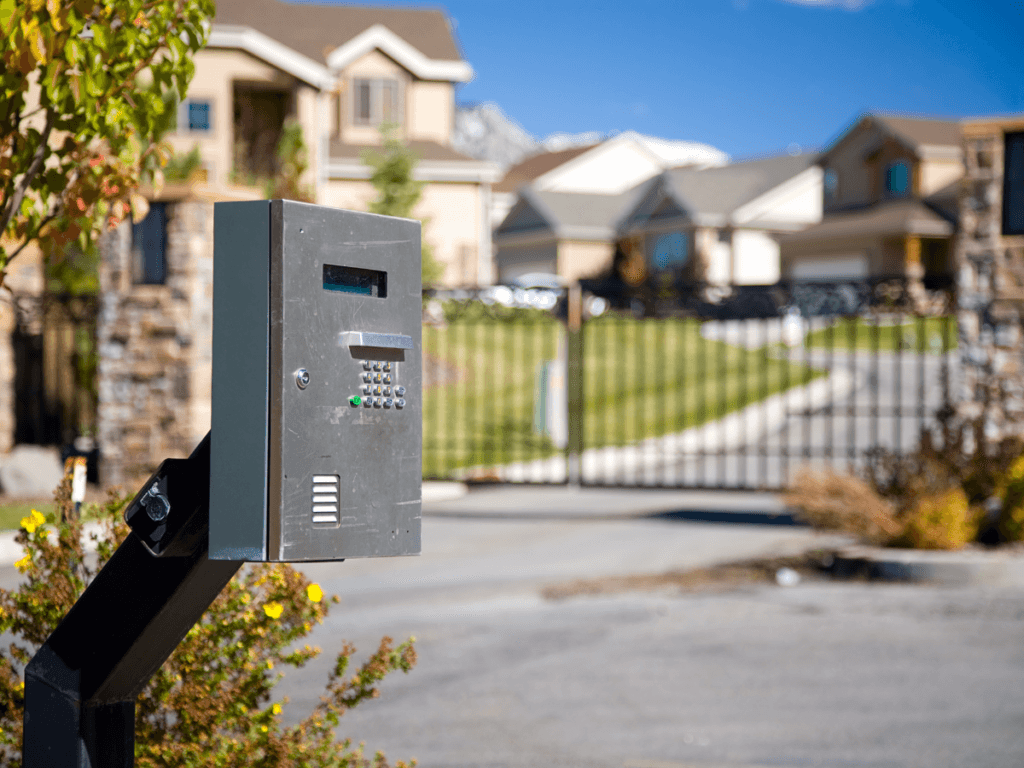
A controlled entrance is only one layer of neighborhood security. Once someone enters a community, security concerns can shift to residential streets, parking areas, clubhouses, pools, walking paths, construction zones, and other shared spaces. That is where residential patrols add value.
A strong gated community security plan combines access control with visible patrols, incident reporting, surveillance, and clear procedures for responding to suspicious activity.
The goal is not to create an intrusive environment. It is to give HOA boards and property managers better coverage of areas that a gate or camera system cannot monitor effectively on its own.
How Residential Patrols Support Day-to-Day Community Security
Patrol officers can move through areas that fixed security measures may not fully cover. Depending on the community’s needs, patrol routes may include entrances, residential streets, parking areas, amenity spaces, perimeter fencing, vacant properties, and locations where residents have reported recurring concerns.
A visible patrol presence can discourage unwanted activity while giving security personnel opportunities to identify issues such as unauthorized vehicles, open gates, damaged fencing, suspicious behavior, or activity in restricted areas.
Southeast Security Services provides armed and unarmed security guards for private communities and HOAs, with deployments tailored to the property and level of coverage required.
Patrols can also create a consistent reporting structure. Instead of relying solely on resident complaints after something happens, officers can document observations, incidents, and recurring vulnerabilities that management may need to address.
Patrol Routes Should Reflect How the Community Actually Operates
Simply driving through the same streets at predictable times is rarely the strongest use of patrol coverage. Effective patrol planning begins with the community itself.
A large subdivision with several entrances may need a different deployment strategy than a smaller neighborhood with one gate and a central clubhouse. Communities with pools, tennis courts, walking trails, or multiple parking areas may also need additional attention during particular hours.
Useful planning questions include:
- Where have residents or management reported recurring concerns?
- Which areas have limited camera coverage or poor visibility?
- When are entrances busiest?
- Which amenities remain accessible after management staff leaves?
- Are there vacant homes, construction areas, or perimeter sections that need additional observation?
- Do certain days or events create unusually heavy visitor traffic?
Security coverage can then be adjusted around those patterns instead of treating every street and every hour as equally vulnerable. Southeast Security Services describes its broader Georgia security services as customized according to the site, risk, and coverage needs rather than built around a standard deployment.
What Concierge Security Adds at Community Entrances
Some gated neighborhoods need more than mobile patrols. Communities with staffed gatehouses or high visitor volume may benefit from personnel who can combine security awareness with resident and guest interaction.
Concierge security services can support visitor flow, entry-point awareness, resident communication, and a professional front-facing presence while still maintaining a security function.
Southeast Security Services specifically identifies gated neighborhoods among the environments where concierge officers can be appropriate.
This can be particularly useful in communities where the entrance serves as both a security checkpoint and the first point of contact for guests, vendors, contractors, or delivery drivers.
Mobile patrols and concierge officers do not necessarily serve the same purpose. The entrance team manages activity at a fixed location, while patrol personnel provide visibility and observation throughout the property.
Why 24/7 Coverage Is Not Automatically Necessary for Every Community
The original section treated around-the-clock patrols as essential, but that is too absolute.
Some neighborhoods may benefit from continuous coverage, particularly if they have recurring incidents, several entrances, large grounds, or security concerns that extend throughout the night.
Others may get better value from targeted patrols during higher-risk periods, such as overnight hours, weekends, holidays, or times when onsite management is unavailable.
The better question is not whether every gated community needs 24/7 patrols. It is when and where security coverage provides the most useful oversight.
For Atlanta-area neighborhoods, security programs can include entrance monitoring, scheduled patrols, common-area observation, and HOA support. Southeast Security Services provides these types of security services for Atlanta residential communities alongside other property-specific options.
Measure Patrol Effectiveness Instead of Assuming Presence Is Enough
A uniformed presence can improve visibility, but gated community security should not be evaluated simply by asking whether guards are onsite.
HOA boards and property managers should periodically review incident reports, access problems, recurring resident complaints, patrol observations, response procedures, and areas where security coverage may be weak.
Patterns in that information can indicate whether patrol routes, staffing hours, access procedures, or surveillance coverage should change.
Security measures also work best when they complement one another. Gates manage entry. Cameras provide observation and records. Patrol officers provide mobility and human judgment. Concierge personnel can support controlled visitor interaction. Clear reporting procedures connect those pieces.
That layered approach is more useful than assuming any single measure can prevent every incident.
A well-designed gated community security plan should evolve with the neighborhood’s layout, resident activity, and actual security concerns rather than remaining fixed simply because a particular patrol schedule has always been used.
Licensed Security Officers and Community Safety
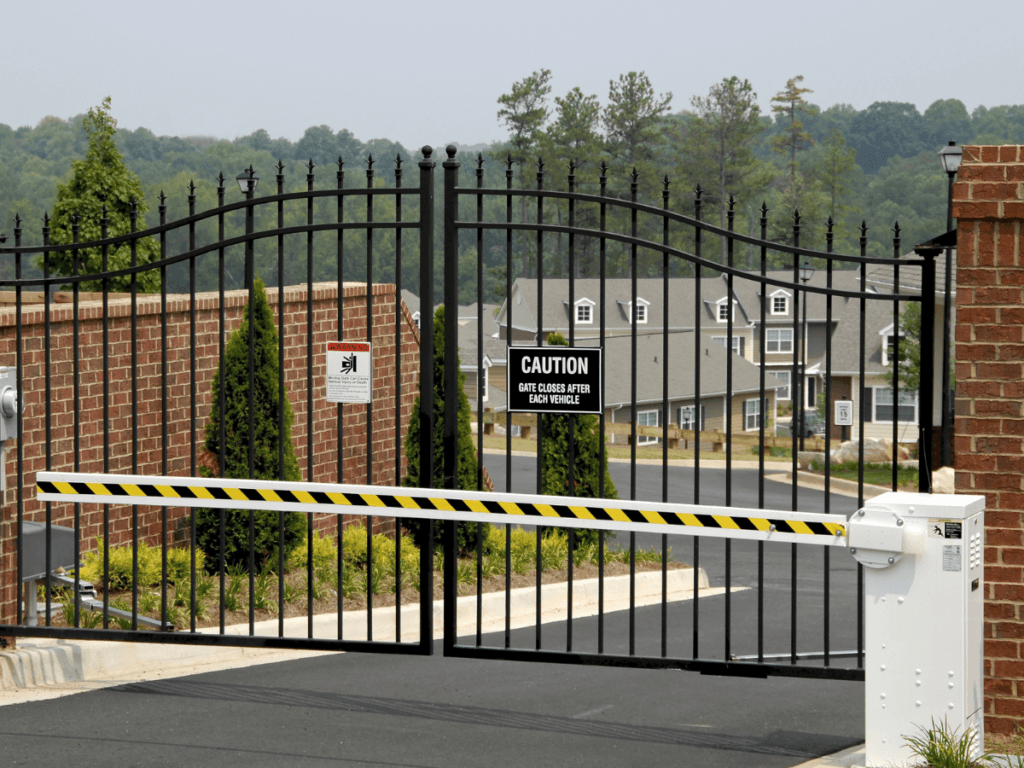
Professional security officers add something that gates, cameras, and automated access systems cannot provide on their own: the ability to observe a situation, interpret what is happening, communicate with the people involved, and respond according to established procedures.
For gated communities, that human element can be particularly valuable. Security concerns do not always arrive as obvious emergencies.
An unfamiliar vehicle repeatedly circling the neighborhood, a contractor attempting to enter outside approved hours, or someone accessing an amenity after closing may require attention without immediately requiring law enforcement.
Licensed officers give HOA boards and property managers a designated point of response for situations like these while supporting the broader gated community security plan.
What Should Security Officers Be Responsible for in a Gated Community?
Officer responsibilities should be defined by the property’s actual risks rather than copied from a generic security plan. A community with several entrances and extensive common areas may require a very different assignment from a smaller development with one staffed gatehouse.
Depending on the property, responsibilities can include monitoring entrances, checking visitor authorization, observing common areas, documenting incidents, responding to resident concerns, and identifying physical security problems such as damaged fencing or malfunctioning gates.
Neighborhood associations and HOAs are among the property types supported by Southeast Security Services, with services including patrol officers, visitor monitoring, and a community-focused security presence.
The distinction between observing and enforcing is also important. Security personnel should have written instructions covering what they are expected to handle themselves, what should be referred to property management, and when emergency services or law enforcement should be contacted.
Why Officer Training Matters in Residential Environments
Residential security requires more than visible deterrence. Officers routinely encounter residents, guests, delivery drivers, vendors, maintenance workers, and property management staff. Many situations call for communication and judgment rather than confrontation.
For example, an unfamiliar person entering a pool area may be a trespasser, but they may also be a resident’s authorized guest who misunderstood the access procedure. An effective officer needs to verify the situation while maintaining control of the interaction and following community policy.
Training therefore needs to support the actual duties officers perform. Communication, incident documentation, situational awareness, emergency procedures, access protocols, and de-escalation all contribute to consistent performance.
This is also where an HOA should look beyond the simple question of whether a security provider can supply personnel.
The more useful questions concern how officers are prepared for the assignment, how site procedures are communicated between shifts, who supervises performance, and how incidents are reported back to management.
Establish Clear Post Orders Before Officers Begin Work
One of the most practical ways to improve security performance is to establish clear post orders, or written instructions describing the officer’s responsibilities at that particular community.
These procedures can address:
- Visitor, vendor, and contractor access
- Gatehouse responsibilities
- Patrol routes and priority areas
- Amenity and clubhouse hours
- Parking or vehicle concerns that fall within the officer’s duties
- Emergency contacts
- Incident documentation
- Escalation procedures
- Communication with HOA or property management personnel
Written expectations reduce the likelihood that different officers will handle the same situation in completely different ways.
They also make it easier for management to evaluate performance. If repeated incidents occur in an area officers are supposed to inspect, management has something concrete to review rather than relying solely on general impressions about whether security “feels” effective.
Match Officer Coverage to the Community’s Risk Profile
Not every gated neighborhood requires the same staffing model. Before determining coverage, management should consider the property’s size, number of entrances, traffic patterns, amenities, previous incidents, after-hours activity, and areas where existing security measures leave gaps.
The surrounding location can matter as well. Southeast Security Services provides community-oriented security across multiple Metro Atlanta markets, including support for HOAs and private communities in areas such as Lawrenceville security services, where assignments can include entrance monitoring, common-area patrols, and support for HOA operations.
A community experiencing problems primarily overnight, for example, may benefit more from targeted evening coverage than from spreading limited resources evenly across the entire day. Another property may need greater attention at its entrances during contractor and delivery hours.
That risk-based approach helps ensure that security staffing addresses identifiable vulnerabilities rather than simply creating the appearance of coverage.
Documentation Can Reveal Problems That Individual Incidents Do Not
Incident reporting is easy to treat as administrative paperwork, but over time it can become one of the more useful parts of a gated community security program.
A single unauthorized vehicle may mean very little. Repeated reports of unauthorized vehicles entering through the same gate at similar times can reveal an access-control weakness.
The same principle applies to damaged fencing, lighting failures, after-hours amenity use, recurring resident complaints, and other patterns.
HOA boards and property managers can periodically review these reports alongside gate records, resident concerns, and maintenance issues. That information can help determine whether patrol routes, staffing periods, access procedures, lighting, surveillance, or physical barriers need adjustment.
Licensed officers are therefore most useful when they operate as part of a larger security system. Gates control entry, cameras extend observation, physical security measures protect vulnerable areas, and officers provide the judgment and response those systems lack.
Effective gated community security comes from coordinating those layers around the community’s actual risks rather than expecting the presence of an officer alone to solve every security concern.
HOA Security Planning for Gated Communities
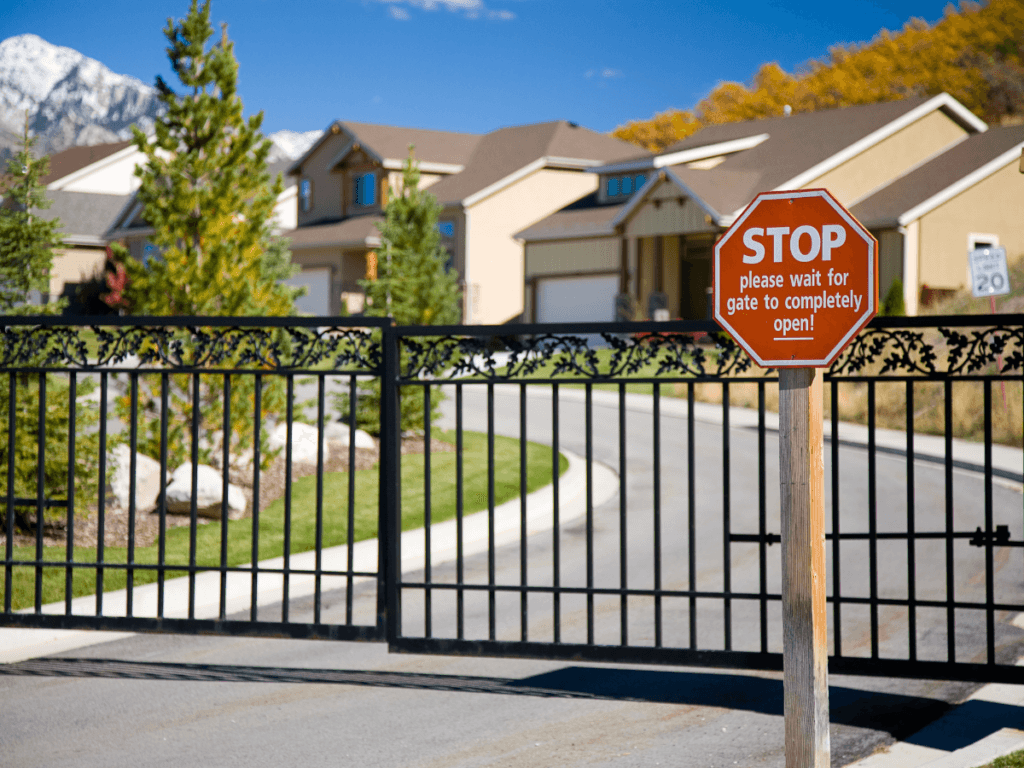
An HOA has a different security role from the officers working at the property. Security personnel carry out assigned duties, but the association and property management team help determine what those duties should be, where coverage is needed, and which community rules affect day-to-day security operations.
That distinction matters. A gated community security plan works best when it is built around the way the neighborhood actually functions rather than a standard package of gates, cameras, and patrols.
Southeast Security Services works with neighborhood associations, HOAs, and residential property managers, so community-based security is an established part of its service scope.
Start With the Community’s Actual Security Risks
Before deciding how many officers to schedule or where cameras should be installed, an HOA should identify the problems it is trying to solve.
A useful assessment looks at the entire property, including entrances and exits, pedestrian access, parking areas, clubhouses, pools, walking paths, mail or package areas, perimeter fencing, and other shared spaces.
Management should also consider when problems occur. A gate that operates effectively during the day, for example, may experience unauthorized entry late at night when traffic is lighter.
Past incident reports can provide useful context. Repeated tailgating at one entrance, vandalism around an amenity, or unauthorized vehicles appearing during certain hours may point to specific weaknesses that deserve more attention.
The goal is not to make every part of the property equally restrictive. It is to concentrate resources where the community has identifiable exposure.
Define How Access Should Work for Different Visitors
Access control becomes complicated quickly in a residential community because not everyone entering the property is a resident.
Guests, contractors, delivery drivers, rideshare vehicles, landscapers, maintenance crews, real estate agents, and emergency responders may all need legitimate access under different circumstances.
HOA policies should make those distinctions clear.
For example, a contractor may be permitted only during established work hours, while a resident’s guest may require confirmation before entry.
Recurring vendors may follow another procedure entirely. Officers and gate staff need clear instructions for each category so residents receive consistent treatment from one shift to another.
The same planning should address exceptions. Management should decide what happens when a guest cannot reach the resident who invited them, a vendor arrives outside approved hours, an access credential fails, or someone disputes an entry decision.
Clear procedures reduce improvisation at the gate and make enforcement easier to explain to residents.
Coordinate Security With HOA Rules and Property Management
Not every HOA rule is a security issue. Trying to make officers responsible for every parking dispute, noise complaint, amenity violation, or neighborhood disagreement can blur their role and divert attention from genuine security priorities.
A better plan separates security responsibilities from routine association enforcement.
The HOA can establish which matters officers should observe and document, which require intervention under their assigned duties, and which should simply be forwarded to management.
That framework is especially useful for recurring concerns such as unauthorized amenity access, suspicious vehicles, after-hours activity, or repeated entry violations.
Southeast Security Services’ community coverage includes functions such as entrance monitoring, scheduled patrols, common-area observation, and support for HOA management, illustrating how several duties can be coordinated within a residential assignment.
Build a Security Plan Around Coverage Gaps
A strong HOA security plan does not necessarily mean adding more of everything. It means identifying where existing measures stop being effective.
If cameras provide good visibility at entrances but little coverage around amenities, patrol routes can focus more heavily on those areas. If a gate experiences its highest traffic during morning contractor arrivals and evening guest visits, staffing can reflect those periods.
Communities with large perimeters may need a different patrol strategy from compact developments where most activity occurs around a clubhouse and central entrance.
This layered approach also prevents HOAs from relying too heavily on any single measure. Gates can help manage vehicle access, cameras can preserve visual information, and officers can provide observation and response. Each serves a different purpose within gated community security.
Review the Plan as the Community Changes
Security planning should not end when a contract begins. Neighborhood conditions change as residents move, amenities are added, traffic patterns shift, landscaping alters visibility, or recurring incidents reveal vulnerabilities that were not obvious during the initial assessment.
HOA boards and property managers can periodically review incident reports, access issues, resident concerns, patrol observations, and changes to the physical property. The objective is to determine whether the current security plan still reflects the community’s needs.
That review may lead to a changed patrol route, revised visitor procedures, different coverage hours, improved lighting, or clearer responsibilities between management and security personnel. In some cases, the existing plan may already be working well and require only minor adjustments.
Treating gated community security as an ongoing management process helps an HOA make decisions based on actual conditions rather than assumptions about what a gated neighborhood is supposed to need.
Access Control and Surveillance Technology for Gated Communities
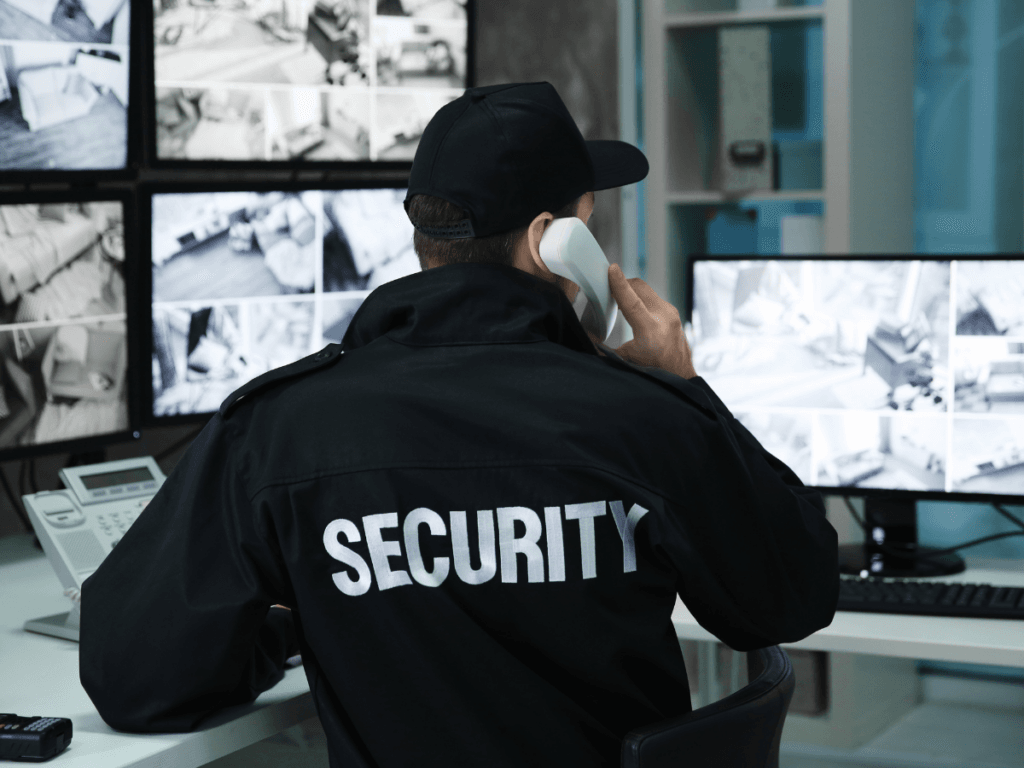
Technology can strengthen gated community security, but only when it solves a specific problem.
Cameras, access credentials, license plate recognition, remote monitoring, and automated alerts all serve different purposes. Installing more technology does not automatically create a safer community if coverage gaps, weak visitor procedures, or unclear response protocols remain.
For HOA boards and property managers, the better approach is to decide what needs to be controlled, what needs to be observed, and what should happen when the system detects something unusual.
Build Access Control Around Different Types of Entry
Residential access is more complicated than simply separating residents from nonresidents. A gated neighborhood may need to accommodate homeowners, tenants, guests, delivery drivers, contractors, maintenance crews, rideshare vehicles, and emergency responders.
That makes the access procedure just as important as the equipment.
Resident credentials may include key fobs, vehicle tags, mobile access, or other authorized-entry methods. Visitor entry may require confirmation from a resident or gate attendant. Vendors and contractors may need access only during approved hours.
The strongest system creates a reliable record of who entered while avoiding unnecessary delays for legitimate visitors. It should also include a procedure for exceptions, such as a failed credential, an unexpected contractor, or a guest who cannot immediately reach the resident who invited them.
Use Cameras to Cover Specific Vulnerabilities
Surveillance cameras are most useful when their locations are chosen intentionally. Simply placing cameras around the property without considering sightlines, lighting, traffic patterns, or recurring incidents can leave important gaps.
Entrances and exits are obvious priorities, but communities may also consider parking areas, mail or package locations, amenity entrances, perimeter access points, and other spaces where management has identified recurring concerns.
Camera placement should answer a practical question. Does management need to confirm which vehicle entered through a gate? Review activity around a clubhouse after hours? Investigate repeated damage in a particular parking area? Those needs should influence both camera placement and the type of footage required.
Where AI-Enabled Surveillance Can Add Value
AI-assisted surveillance can help security teams manage large volumes of video more efficiently. Instead of expecting someone to continuously watch every camera feed, analytics can flag predefined activity for closer review.
Southeast Security Services offers AI surveillance and remote monitoring that can incorporate smart cameras, motion detection, license plate capture, drone technology, and real-time monitoring.
Its systems can also be integrated with onsite security personnel when a detected event requires a human response.
For a residential community, the practical applications are more important than the label “AI.” Useful functions might include detecting movement in a restricted area after hours, identifying a vehicle entering a monitored zone, or bringing unusual activity to an officer’s attention more quickly.
AI alerts should still be treated as information requiring evaluation, not automatic proof that a security incident has occurred.
Connect Technology to Patrol and Response Procedures
Technology becomes much more valuable when the community has already decided what happens after an alert.
If a camera detects activity around a closed pool at 2 a.m., who reviews it? Does an onsite officer investigate? Is the property manager notified? What circumstances justify calling law enforcement?
The same principle applies to gate alarms, forced-entry notifications, or suspicious vehicle activity.
An integrated gated community security plan should therefore connect three stages:
- Detection: A camera, access system, resident report, or officer identifies something unusual.
- Verification: Security personnel or management determine what is actually happening.
- Response: The appropriate person documents, investigates, escalates, or resolves the issue according to community procedures.
Without that sequence, advanced technology can generate alerts without improving the community’s ability to act on them.
Avoid Treating Background Screening as Routine Visitor Control
The original section grouped visitor background screening with normal access control, but that is not an appropriate default for a gated neighborhood.
Routine guests, delivery personnel, and rideshare drivers are usually better managed through authorization and entry procedures.
Formal screening may be relevant in specific employment, vendor, contractor, or property-management contexts, but it raises different privacy, legal, and administrative considerations.
An HOA should define who actually requires vetting rather than treating every nonresident as a screening candidate.
Evaluate Security Technology by What It Improves
The most useful measure of surveillance technology is not how advanced it sounds. It is whether it improves visibility, documentation, response time, or control over a known vulnerability.
HOAs can periodically review incident reports, false alarms, missed coverage, access records, and officer feedback to determine whether the technology is helping.
A camera that repeatedly produces unusable nighttime footage may need relocation or better lighting. An automated alert that triggers constantly without identifying meaningful activity may need its settings adjusted.
That review keeps gated community security grounded in practical outcomes. Technology should extend what guards, property managers, and existing physical controls can do, not replace thoughtful security planning with another layer of equipment.
Choosing Gated Community Security Services in Georgia
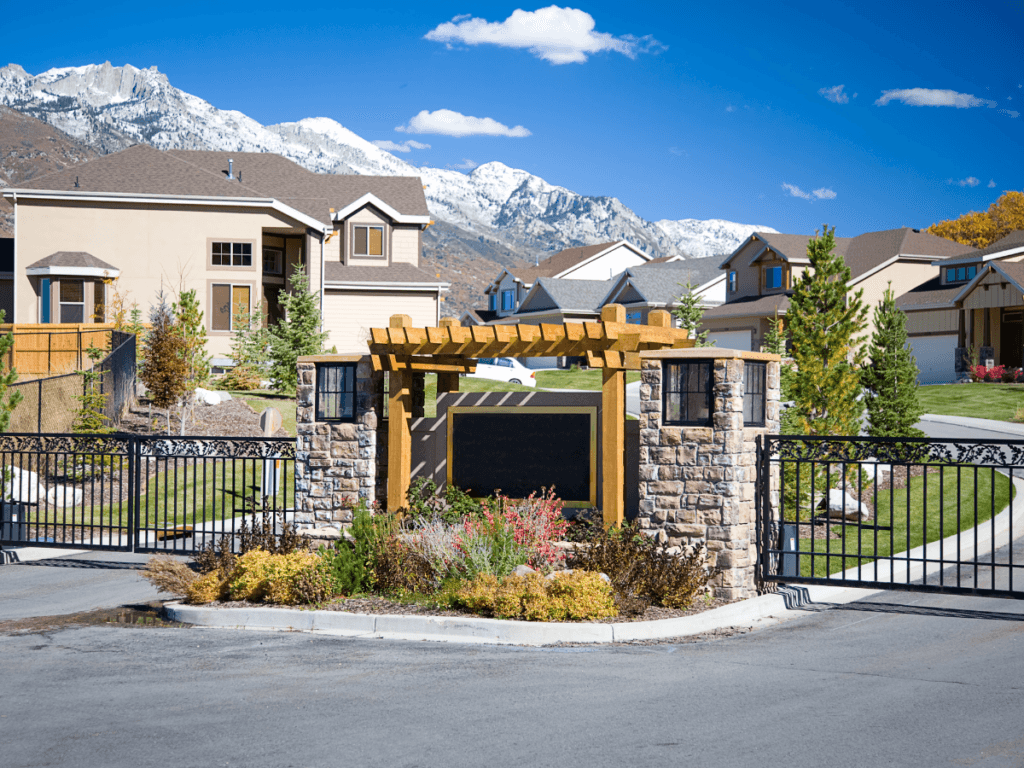
Selecting a security provider for a gated neighborhood is less about finding the company with the longest service list and more about determining whether that company can translate the community’s specific concerns into a workable security plan.
HOA boards and property managers should evaluate who will actually be assigned to the property, how officers are supervised, how incidents are documented, and whether coverage can change as the neighborhood’s needs evolve.
Those questions provide a clearer picture of service quality than broad promises about deterrence or protection.
Evaluate the Company’s Experience and Leadership
Residential security involves frequent interaction with residents, visitors, contractors, vendors, and property management staff. A provider therefore needs both security experience and an understanding of how professional conduct affects the community experience.
Southeast Security Services describes its operation as law-enforcement-led and employs personnel that includes licensed investigators, tactical operators, off-duty officers, firearms instructors, and concierge-level staff.
Its team undergoes screening and training intended to support professionalism, preparedness, and discretion.
HOAs comparing providers can look at the company’s security leadership and operating approach alongside more practical questions about how that experience translates to a residential assignment.
Ask who supervises the account, how replacement personnel are handled when a regular officer is unavailable, and how management communicates concerns or requests changes.
A provider’s organizational structure can become particularly important once an HOA moves beyond occasional patrol coverage to an ongoing security program.
Look Closely at Officer Qualifications and Training
It is reasonable to ask what standards a company uses when selecting personnel for gated community security.
Southeast Security Services lists prior law enforcement, military, or security experience among its preferred qualifications and requires a valid Georgia security license or the ability to obtain one.
The company also identifies professionalism, communication skills, a clean background, and reliability as candidate requirements.
Its security officer hiring and training standards also reference continued development in areas such as conflict resolution, emergency response, and surveillance techniques.
For an HOA, those details should lead to more specific questions:
- What training is required before an officer receives a residential assignment?
- Are officers briefed on the community’s post orders before their first shift?
- How are incident reports reviewed?
- Who provides supervision and quality control?
- Can the provider supply personnel suited to resident-facing gatehouse duties as well as patrol work?
Qualifications matter, but assignment fit matters too. Someone well suited to a high-risk commercial site may not necessarily be the best person for a neighborhood position requiring frequent interaction with families, guests, and vendors.
Ask How the Security Plan Will Be Customized
“Customized security” should mean more than selecting the number of guards from a service package.
Before recommending coverage, a provider should understand the property’s entrances, traffic patterns, amenities, existing cameras, previous incidents, visitor procedures, and hours when concerns are most likely to occur.
The resulting plan might place greater emphasis on gatehouse coverage, mobile patrols, overnight monitoring, technology, or a combination of measures.
Georgia communities should also confirm that a provider can reliably cover their location. Southeast Security Services lists service availability throughout Metro Atlanta and numerous areas across Georgia, with contracted services extending farther across the Southeast for certain assignments.
Its security service area coverage can help property managers determine whether their community falls within its regular operating footprint.
Use Testimonials as One Part of Due Diligence
Testimonials can be useful, but they should support rather than replace a broader evaluation.
Southeast Security Services publishes feedback from Atlanta-area customers, including a client who hired the company specifically to patrol a gated community and described the team as professional and responsive.
Those experiences are relevant to residential security, unlike testimonials concerning unrelated services such as executive protection or private investigations.
Still, an HOA should look beyond testimonials. Ask for information about residential experience, reporting procedures, supervision, scheduling, and how service problems are resolved.
If references are available, speaking directly with another property manager or HOA representative can provide more context about what the working relationship is like over time.
Compare Proposals on More Than Price
Security proposals can look similar while covering very different levels of service. HOA decision-makers should compare exactly what each provider includes.
One proposal might cover an officer during fixed hours but leave supervision, incident reporting, or vehicle patrols unclear. Another may define patrol frequency, reporting responsibilities, supervisory oversight, escalation procedures, and technology integration.
Before signing an agreement, clarify:
- Coverage hours and staffing levels
- Armed versus unarmed personnel
- Gatehouse and patrol responsibilities
- Supervisor involvement
- Incident and daily activity reporting
- Procedures for emergencies and call-outs
- Options for changing coverage
- Pricing for additional or temporary staffing
The best gated community security provider is not necessarily the company offering the most services or the lowest hourly rate.
It is the one that can explain what the community needs, why each security measure is being recommended, how personnel will be managed, and how performance will be reviewed after deployment.
For an HOA, that makes the selection process a form of risk planning rather than simply a vendor comparison.
Conclusion
Effective gated community security requires more than controlling who enters and exits the neighborhood.
A well-planned approach can combine trained security personnel, access control, routine patrols, visitor management, and responsive monitoring to help protect residents and property while maintaining a welcoming community environment.
Because every Georgia neighborhood has different layouts, traffic patterns, and security concerns, working with experienced professionals can help ensure the right measures are in place. For dependable residential security and customized protection solutions, choose Southeast Security Services.
If you’re ready to strengthen security throughout your gated community, call tel:4045047023 to speak with the team at Southeast Security Services or fill out the website form to request your free estimate today.